
If you are struggling with a herniated disc and seeking the least invasive surgical option, Desert Institute for Spine Care may have the solution you need. We specialize in endoscopic intralaminar discectomy, a minimally invasive discectomy that addresses conditions like sciatica and herniated discs and gets you back on your feet sooner than many alternative procedures.
When outpatient spine surgery is the only thing you have time for, our professionals are ready to help ease your symptoms and speed up recovery from any spinal injury or chronic pain.
Endoscopic interlaminar discectomy is an ultra-minimally invasive spine surgery used to treat herniated discs in the lumbar spine, typically at the L5-S1 interlaminar space. During the procedure, the surgeon makes a small ¼ inch incision near the affected area. Then, using fluoroscopic X-ray guidance, they place a blunt metal dilator through the muscle down to the interlaminar window above the spinal cord.
After confirming the dilator’s placement of dilator, the surgeon will introduce a metal working cannula, remove the dilator and insert a tiny HD camera attached to an endoscope. This camera allows the surgeon to clearly visualize the spinal area and herniated disc material. Specialized tools are used to carefully remove the disc material pressing on the spinal nerves, alleviating pain and discomfort.
The surgery is performed with minimal disruption to surrounding muscles and tissues, making it less invasive than traditional herniated disc surgery. After the procedure, the incision is closed with minimal stitches, and patients can usually leave the surgical facility the same day to begin their recovery process.
Video credit to Arthrex
An interlaminar endoscopic discectomy is performed to treat spine conditions related to herniated, bulging discs and spinal stenosis in the spine that are causing nerve compression. The procedure is particularly beneficial for patients who have not found relief through nonsurgical treatments or want a treatment that is as minimally invasive as possible.
The procedure is most often performed to address the following conditions:
An endoscopic interlaminar discectomy also treats symptoms caused by nerve compression due to a herniated or bulging disc. These symptoms include:
When it comes to treating a herniated disc in the lumbar spine, endoscopic discectomy provides several key advantages over traditional surgical methods:
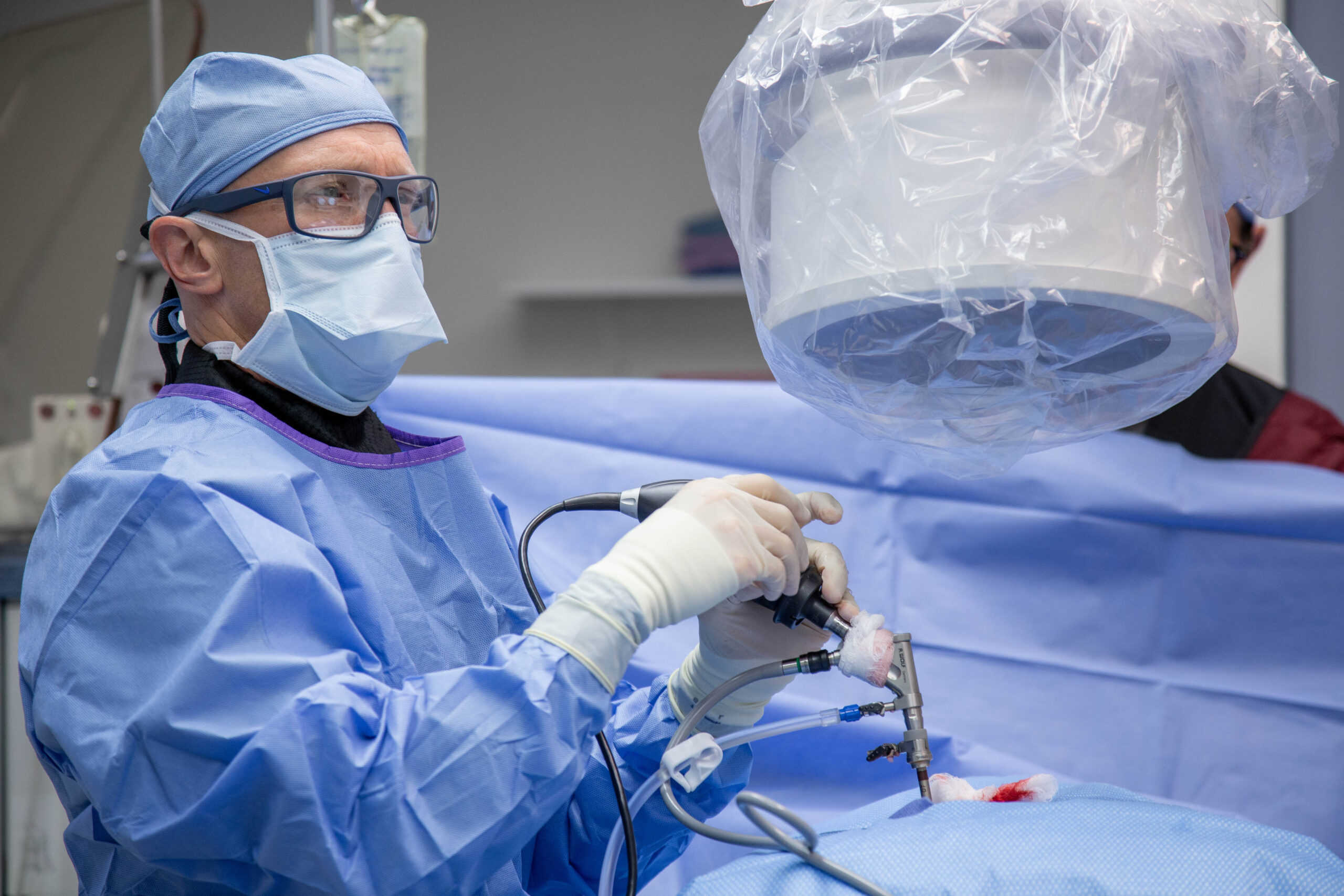
Dr. Yeung performing an Endoscopic Interlaminer Discectomy
If you are dealing with a herniated disc, you may be a good candidate for interlaminar endoscopic lumbar discectomy. Ideal candidates for an endoscopic interlaminar discectomy are:
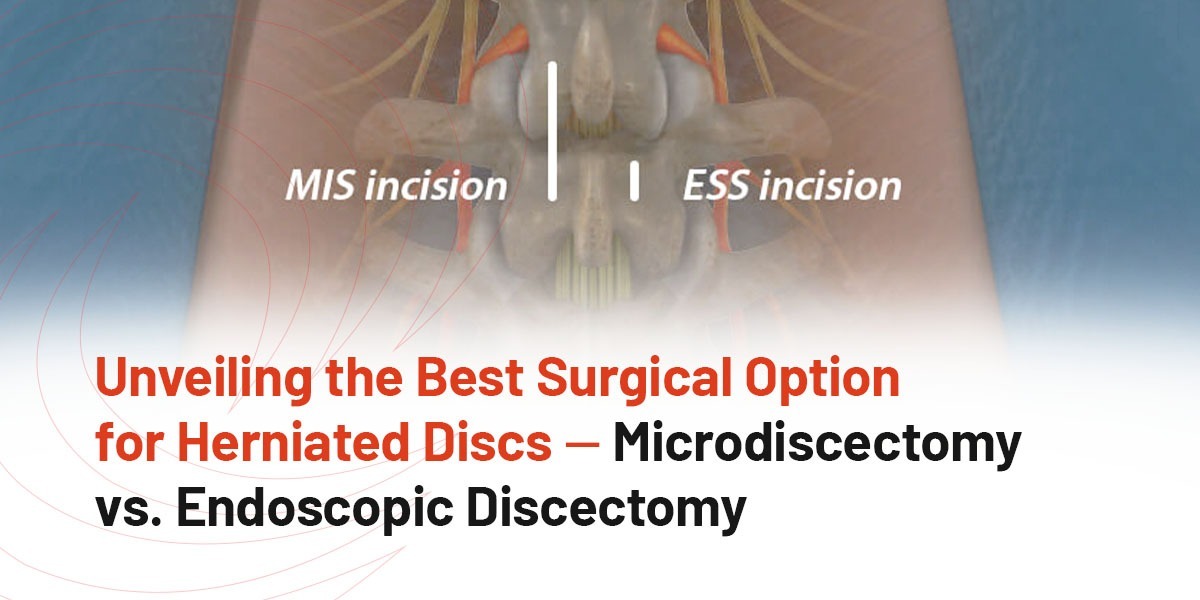
When it comes to treatment options for herniated discs, many patients have the option of choosing between a minimally invasive microdiscectomy (MIS) and endoscopic discectomy (ED). While both procedures aim to remove herniated disc material, the endoscopic discectomy method is typically less invasive. Microdiscectomy requires a larger incision (1-inch versus ¼-inch endoscopic) and may involve more muscle dissection. It may also lead to the partial removal of bone in a procedure called a laminectomy. Endoscopic discectomy uses a tiny incision and avoids laminectomy entirely. In most cases, this results in a quicker recovery and less pain.
Furthermore, while operating, an MIS surgeon utilizes a microscope to visualize, whereas the ED surgeon uses an HD camera attached to an endoscope that connects to an HD monitor. Because of that difference, the endoscope allows superior visualization in water-based environments like the body and offers a larger operating field.
Due to the minimally invasive nature of the procedure, most patients can expect a relatively quick recovery after an endoscopic interlaminar discectomy. You may experience mild discomfort or soreness around the incision site, but this typically resolves within a few days.
Pain relief from nerve compression symptoms, such as sciatica or leg weakness, is often felt shortly after the procedure. Patients can usually return home the same day and can begin light activities soon after. Full recovery may take a few weeks, but most individuals return to regular activities within a few weeks to a couple of months, depending on their specific condition and the surgeon’s recommendations. Physical therapy may also be suggested to aid in strengthening and improving flexibility.
If you’re a spine patient in Canada seeking pain relief, endoscopic spine surgery could be the solution you’ve been waiting for. This cutting-edge, minimally invasive procedure targets herniated discs and other spinal conditions while minimizing disruption to surrounding tissues. However, due to significant wait times in the country for spine surgeries, you may want to consider alternative care options.
Whether you’re in Toronto, Vancouver or any other part of Canada, our expert herniated disc specialists offer advanced treatment options for herniated discs, spinal stenosis and nerve compression. We prioritize reduced muscle disruption and smaller incisions, allowing you to return to normal activities much sooner.
Seek a Virtual Second Opinion Today
Are you ready to explore endoscopic interlaminar discectomy for herniated disc treatment? Contact us to schedule a consultation with one of our herniated disc surgeons in Phoenix, Arizona, or to learn more about treatment options in Canada. Our team of experts is here to guide you toward a faster, less painful recovery.