
If you’re considering endoscopic spine surgery, you’re probably balancing safety concerns with your hope for relief from chronic pain. Endoscopic spine surgery has transformed how surgeons treat disc-related conditions. This guide explores ideal candidacy and the success data you’ll need to consider whether endoscopic surgery can support your goals for restored mobility and function.
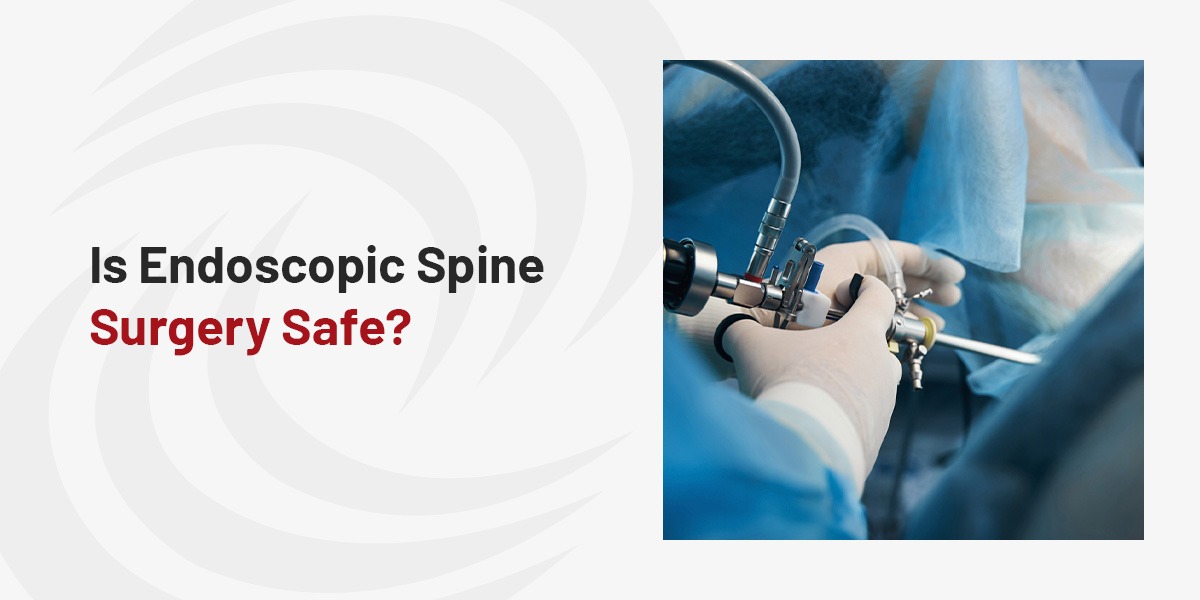
Instead of a large cut, doctors make a very small incision — only about a quarter inch. Through this opening, they insert a small camera called an endoscope and special tools. This allows them to see inside your back on a screen and fix the issue with great accuracy, without disturbing your back muscles much. You’ll be comfortably sedated, and the area numbed.
The surgeon uses X-ray guidance to carefully guide a small tube to the part of your spine that’s causing pain. Through this tube the endoscope is passed and tiny instruments are used to gently remove anything pressing on your spinal nerves, such as a slipped disc or a bone spur. This takes pressure off the nerves, helping reduce your pain.
After the procedure, the incision is closed with a small stitch. You’ll spend a short time recovering and typically go home the same day.
Spine surgery has shifted toward these least invasive techniques because patients typically experience less pain, resume normal activities sooner and avoid extended downtime. Studies indicate that patients undergoing endoscopic approaches tend to return to work more quickly than those with conventional surgery.
Clinical data indicate encouraging success rates for endoscopic spine surgery. In medical terms, success means measurable improvements in pain relief, restored function and the ability to return to work and daily activities.
Studies suggest that transforaminal endoscopic discectomy (TED) — one of the most common endoscopic procedures — may offer better postoperative back pain relief, shorter hospital stays and faster overall recovery compared to traditional open microdiscectomy. Patients treated with endoscopic approaches often leave the surgical center the same day. Open surgery typically requires overnight monitoring.
Indications are that full-endoscopic procedures achieve clinical outcomes and complication rates comparable to those of microendoscopic discectomy, often resulting in similar long-term outcomes with minimal tissue disruption.
While studies show faster restoration of normal movement following endoscopic procedures, success isn’t just about the procedure itself. Your individual outcome depends on factors, including:
Choosing an experienced surgeon matters significantly. This expertise directly impacts your safety and recovery timeline. A neurosurgeon or orthopedic spine surgeon who regularly performs endoscopic procedures and participates in ongoing advanced training has complication rates well below those who are still mastering the technique.
Understanding ideal suitability for endoscopic spine surgery opens the door to more productive conversations with your surgeon about what’s possible in your situation.
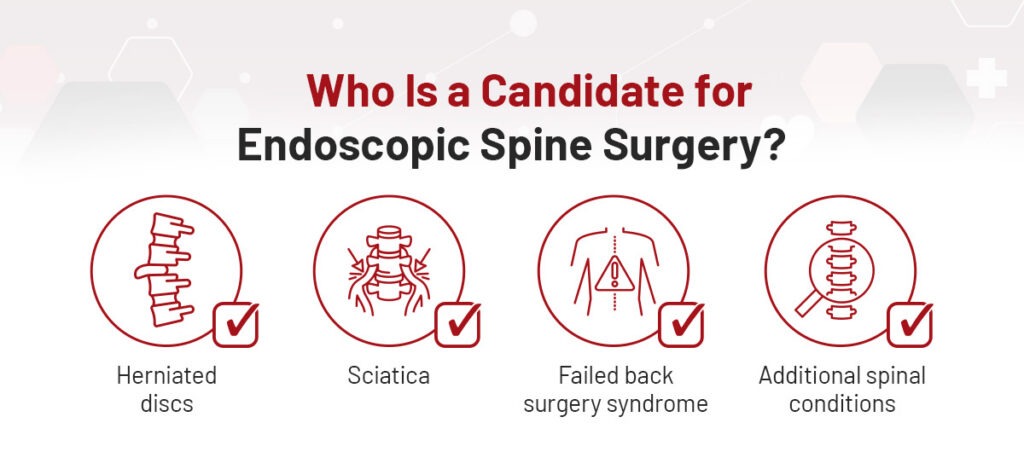
Many spine conditions can be treated with endoscopic techniques, including:
For patients considering endoscopic surgery, a common prerequisite is having first tried conservative treatments like physical therapy, medications or injections without achieving adequate relief. Typically, patients present with symptoms that have persisted for 6 to 12 weeks and interfere with work, sleep or activities you enjoy.
While age isn’t necessarily a limiting factor, greater importance is placed on your overall health and the specific spinal condition causing your symptoms.
Considering any spine surgery is an important decision. Endoscopic spine surgery may be an appropriate option if you are experiencing:
Persistent pain: Has your chronic back or neck pain persisted for several months despite dedicated attempts with conservative treatments like physical therapy, medication or injections?
Impact on quality of life: Does your pain significantly limit your daily activities, even after trying nonsurgical approaches?
Neurological symptoms: Are you experiencing neurological issues like numbness, tingling, weakness or radiating pain in your limbs? This may indicate nerve compression that requires intervention.
Before considering surgical intervention, a thorough exploration of nonsurgical options is crucial. For many individuals with back pain, lasting improvement stems from a well-planned, consistent approach to conservative care. These interventions typically aim to reduce inflammation, restore movement and address the root causes of discomfort.
While surgical evaluation often takes place when symptoms have persisted for 6 to 12 weeks, and conservative therapies have not yielded adequate relief, it’s important to understand the typical conservative window. Meaningful progress is often observed within weeks of consistent, appropriate care.
This care commonly combines:
Physical therapy and rehabilitation: Structured exercise is designed to strengthen spinal support muscles, improve flexibility and enhance confidence in movement.
Nonsurgical interventions: Injections, like corticosteroids, may be used to reduce nerve inflammation. These are generally part of a broader treatment plan alongside physical therapy.
Lifestyle adjustments: Modifying daily activities, optimizing ergonomics, managing weight and pacing physical demands can help alleviate repeated spinal strain.
Making informed decisions about back pain extends beyond personal research. It requires professional guidance. While online information is helpful, it is best to make decisions in consultation with professionals who fully understand your condition and genuinely care about helping you get back to enjoying life.
Should surgery emerge as the most suitable option, it’s reassuring to know that modern spine care has evolved considerably from traditional open back surgery. Contemporary minimally invasive techniques prioritize reduced tissue disruption, shorter recovery periods and potentially a quicker, more comfortable return to daily activities.
The Desert Institute for Spine Care holds a pioneering position in endoscopic spine surgery. Recognized as Phoenix Magazine Top Docs, our surgical specialists also provide global training to surgeons in these advanced invasive procedures.
Our success rates for endoscopic spine surgery reflect our commitment to excellence, with our comprehensive range of care spanning cutting-edge endoscopic techniques to complex traditional procedures. We always recommend the approach that gives you the best chance at improved comfort and mobility.
The expert guidance and compassionate support of our team empower patients to reclaim the activities and moments that bring them joy. Schedule your consultation today and discover what’s possible when you work with innovators in spine care.
Linked sources:


 By Nima Salari, M.D., FAAOS