
Studies show that around 16 million American adults experience chronic back pain. When neck or back pain starts to limit how you move, sleep or work, the decision to consider artificial disc replacement (ADR) can feel heavy. Many patients reach this point after months or years of trying conservative care, only to feel unsure about what comes next.
You may be worried about choosing the wrong surgeon, being pushed into surgery too quickly or losing mobility instead of regaining it. Below, we’ll help you understand what to look for in an ADR surgeon so you can make a decision rooted in clarity and focus on protecting your long-term spine health.
An ADR procedure requires precise technique, a deep understanding of spinal biomechanics, and experience managing both straightforward and complex cases. The margin for error is small and the surgeon’s background plays a direct role in how safely and effectively the procedure is performed.
Board certification in orthopedic surgery or neurosurgery is an essential foundation. Fellowship training means an additional year dedicated specifically to spine surgery. During this time, surgeons focus exclusively on spinal anatomy, disc mechanics, motion preservation and advanced surgical approaches. This distinction matters. A surgeon trained primarily in general bone or nerve surgery may not have the same depth of experience evaluating disc-related pain or preserving spinal movement.
How often a surgeon performs ADR surgery plays a meaningful role in outcomes. High-volume ADR surgeons refine their technique over time. Their surgical teams become highly coordinated, knowing each step of the procedure in advance. This efficiency can reduce operative time and lower the likelihood of unexpected issues during surgery. As a patient, asking how many ADR procedures a surgeon performs annually provides insight into whether this surgery is a regular part of their practice or an occasional offering.
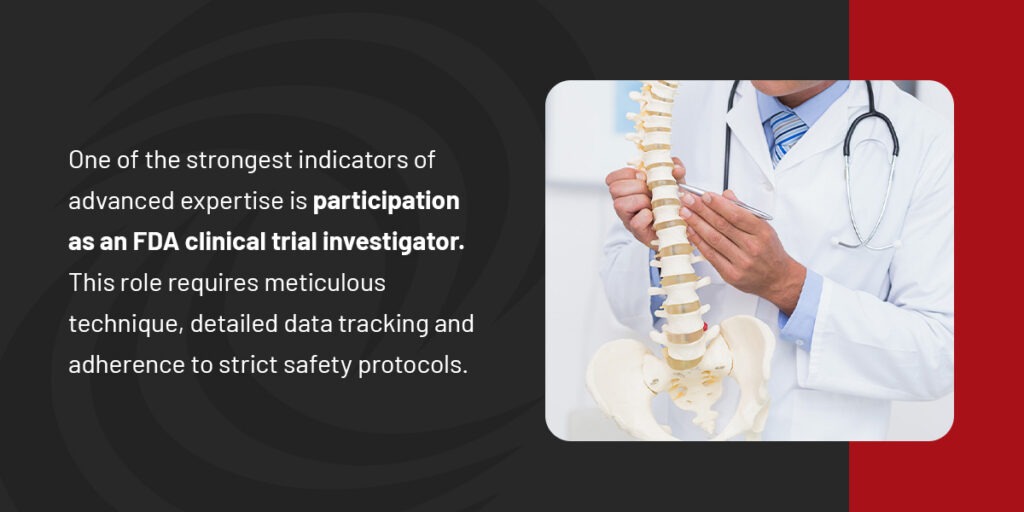
One of the strongest indicators of advanced expertise is participation as an FDA clinical trial investigator. This role requires meticulous technique, detailed data tracking and adherence to strict safety protocols. It also means the surgeon is involved in shaping how new devices are evaluated and refined.
For patients, this level of involvement can signal trust, precision and a commitment to evidence-based care that goes beyond adopting technology after it becomes widely available.
A careful, individualized evaluation process is often the clearest sign that a surgeon is focused on long-term success. A thorough spine evaluation is a structured and patient-centered process designed to uncover the true source of back or neck pain. It begins with an in-depth review of your medical history, lifestyle activities, prior injuries, and symptoms. This is followed by a comprehensive physical and neurological examination to assess reflexes, range of motion, strength, sensation and nerve involvement.
Advanced imaging such as MRI or CT scans are used to assess discs, nerves, and spinal structures in detail. By combining clinical findings with imaging results, providers can accurately diagnose conditions such as herniated discs, spinal stenosis, or degenerative changes. The ultimate goal is to determine the underlying cause of symptoms (pain generator), evaluate how they impact daily function, and develop a personalized treatment plan—whether that involves conservative options like physical therapy and injections or, when necessary, surgical intervention.
Advanced Diagnostics and Pain Mapping
Imaging is an essential tool, but it should never be the sole basis for surgical decisions. Comprehensive evaluation includes personalized pain mapping. This process combines imaging, physical examination, symptom patterns and targeted diagnostic tools to confirm which structure is actually generating pain. For example, two patients may have similar MRI findings, yet only one benefits from ADR based on how their symptoms present and respond to movement.
A skilled ADR surgeon understands that not every patient is a good candidate for disc replacement. Certain conditions, such as severe facet joint arthritis or spinal bone spurs, or spinal instability may make ADR less effective or unsafe.
An honest surgeon is willing to explain these limitations clearly. In some cases, they may recommend a different procedure or advise against surgery altogether. While this can be disappointing, it demonstrates a commitment to patient safety and appropriate care.
A responsible surgeon ensures that conservative treatments have been fully explored before recommending ADR. This may include physical therapy, targeted injections, activity modification and other nonsurgical options. For many patients, these approaches provide meaningful relief and delay or eliminate the need for surgery. When surgery is eventually recommended, patients can move forward knowing it is truly necessary.
It is important for surgeons to be completely open about both the benefits and risks of ADR surgery.
Patients often hear national success statistics, but personal outcomes matter just as much. A transparent surgeon is willing to discuss their own complication and revision rates and explain how those numbers compare to broader data. This conversation helps patients understand realistic expectations and shows that the surgeon carefully tracks their progress.
ADR is designed to preserve motion over the long term. Surgeons who track outcomes beyond the initial recovery period demonstrate long-term accountability. Following patients for an extended period provides insight into device durability, spinal health and sustained function. This focus reflects concern for the lifespan of the solution, not just the immediate surgical result.
Patient feedback can be helpful when interpreted thoughtfully. Reviews that mention specific improvements, such as returning to hiking, working comfortably or sleeping through the night, often indicate meaningful functional gains. These details align with the broader goal of restoring lifestyle and mobility rather than simply addressing pain.
Understanding warning signs can help patients avoid unnecessary stress and risk. Every patient needs to be aware of the following red flags:
Understanding how to verify that your potential surgeon is the right choice is an important step in any ADR procedure.
Patients can and should confirm credentials through state medical boards and professional organizations. Fellowship training, board certification and disciplinary history are publicly available.
Claims of FDA trial participation can also be verified through ClinicalTrials.gov, helping patients distinguish verified expertise from marketing language.
Second opinions are a normal and healthy part of surgical decision-making. If one surgeon recommends fusion without discussing motion-preserving alternatives, another opinion may offer clarity.
Confident surgeons welcome second opinions and understand that reassurance builds trust.
Preparing questions in advance can help patients stay focused during appointments. Helpful questions include:
Finding an ADR surgeon is about finding a provider who understands how spine pain affects daily life and approaches care with patience, honesty and precision. The right surgeon helps replace uncertainty with clarity through thorough evaluation, open communication and a commitment to choosing the least invasive option appropriate for your condition.
If you are exploring ADR surgery and want care grounded in experience, research and compassion, Desert Institute for Spine Care can help. Our board-certified spine surgeons are leaders in minimally invasive and least invasive spine surgery, offering individualized evaluations and treatment plans designed to improve comfort, mobility and quality of life.
Contact us for a consultation today and take the next step toward restoring your lifestyle.

Linked Sources:


 By Mark J. Wang, M.D.