

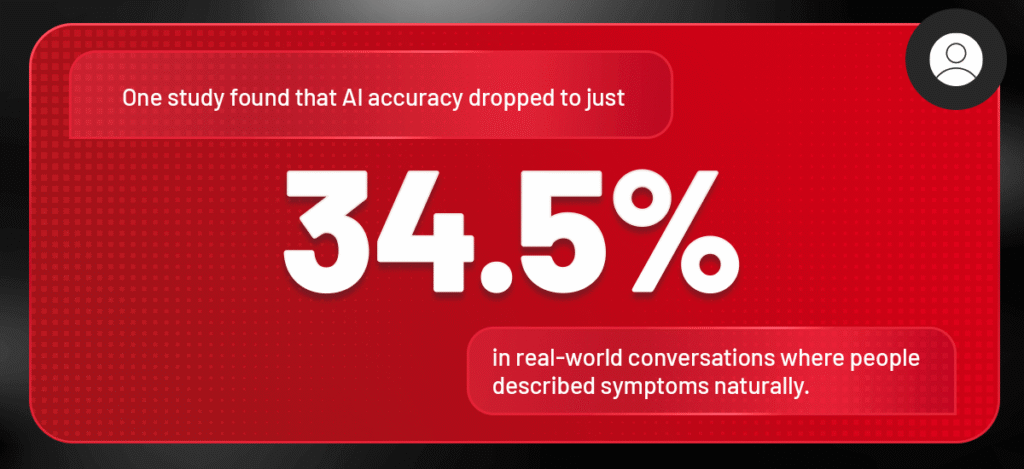
When back pain strikes, it may feel tempting to turn to AI chatbots for immediate guidance. While it may take time to schedule a healthcare appointment, patients can get answers to their questions about back pain from AI right away. However, research has revealed the limitations in how artificial intelligence interprets symptoms and gives medical advice. One study found that AI accuracy dropped to just 34.5% in real-world conversations where people described symptoms naturally.
While AI can give you general information, it lacks the investigative expertise and clinical context needed for an accurate diagnosis. A professional evaluation from a spine specialist can more accurately diagnose your symptoms and determine the best course of action to find relief.
Artificial intelligence can have limitations, such as trouble accurately assessing back pain symptoms and providing safe recommendations. Knowing these risks is important for anyone considering using AI as a diagnostic tool for back pain or other spinal diseases:
AI chatbots struggle with understanding the nuanced ways patients describe their symptoms. Back pain varies widely in presentation, and small differences in phrasing can lead AI to vastly different conclusions. Common variances include:
Pain quality: Sharp, dull, burning, aching or throbbing sensations
Timing patterns: Constant, intermittent, morning stiffness or evening worsening
AI models are trained on structured medical data, but they can’t always interpret incomplete or contradictory ways people actually discuss their pain. For back pain specifically, an AI might confuse muscle strain with disc herniation, or mistake sciatica for a less serious condition, depending on how a patient phrases their symptoms.
Back pain can signal conditions ranging from minor muscle strain to medical emergencies that need immediate intervention. Experienced physicians are trained to identify red flag symptoms that indicate serious underlying problems — signs that an AI system isn’t equipped to recognize or prioritize.
For example, AI can miss critical factors like:
This shows how an AI misdiagnosis and generic recommendations could be risky without a patient’s complete medical picture.
One of the most concerning characteristics of AI chatbots is their tendency to hallucinate, or generate information that sounds authoritative and confident but is factually incorrect or fabricated. These hallucinations can be concerning in medical contexts because the AI presents false information with the same certainty it uses for accurate data.
Research studies have found significant problems with sourcing in these AI chatbots. According to one study, ChatGPT provided advice that was often unclear about its origins and lacked scientific citations. This made it impossible to verify its accuracy or determine if the recommendations reflected current medical literature.
Another study evaluated ChatGPT’s performance on clinical guidelines for low back pain and found problematic patterns. For instance, it failed to acknowledge when there was not enough data to support its recommendations, and even presented uncertain information as fact. This pattern of fabricating supporting evidence while sounding medically credible makes AI particularly risky for patients seeking trustworthy guidance.
AI models learn from vast datasets drawn from historical medical records, published research and online information. This training process means AI can inherit and even amplify existing biases present in healthcare data. The result is a system that may provide different quality advice depending on factors like a patient’s gender, race or socioeconomic background — disparities that reflect historical inequities in healthcare access and research.
The U.S. Agency for Healthcare Research and Quality has raised concerns about biased training data in AI diagnostic tools, warning that these systems can encode and perpetuate systemic biases in their outputs. When an AI makes recommendations for back pain treatment, these biases can affect everything from which conditions it considers most likely to which treatments it suggests first.
One study reviewing the use of ChatGPT in musculoskeletal rehabilitation concluded that due to limitations in consistency, completeness and clinical reasoning, AI should remain supplementary rather than serve as a primary decision-making tool.
While AI gives you convenient access to general information, a proper medical diagnosis uses a much different approach. Spine specialists combine physical examination, detailed medical history review and diagnostic imaging to differentiate between the dozens of possible spinal conditions that can cause similar symptoms.
A comprehensive evaluation includes physical tests that assess your range of motion, nerve function and pain response. Specialists also consider factors AI cannot access:
Symptom evolution: How pain has changed or progressed over days, weeks or months.
Activity responses: The movements, positions or activities that worsen or relieve symptoms.
Family medical history: Genetic factors or inherited conditions that may contribute to spinal problems.
Physical examination findings: Subtle clinical signs that signal specific nerve involvement or structural issues.
Expert diagnosis depends on clinical examination methods that go far beyond algorithmic pattern matching. When evaluating chronic back pain, specialists investigate whether the source is mechanical, neurological, inflammatory or related to other systemic conditions. This diagnostic precision can determine the right treatment approach and prevent unnecessary interventions and delayed care for serious conditions.
It’s important to reach out to professionals when you notice certain red flag symptoms, as a self-assessment can be risky. Seek medical attention if your back pain is accompanied by:
Fever
Unexplained weight loss
Loss of bowel or bladder control
Progressive weakness or numbness in the leg
Pain that worsens despite rest
Even without emergency symptoms, persistent back pain that interferes with daily activities likely means it’s time for a professional evaluation. Seeking a second opinion from a specialist can reveal new diagnostic insights, showing just how complex a spinal diagnosis can be.
When you need an accurate diagnosis for back pain, the experts at Desert Institute for Spine Care are here to help. Our board-certified, fellowship-trained spine surgeons combine advanced diagnostic techniques with a comprehensive understanding of spinal conditions to identify the true source of your pain.
With a reputation as leaders in innovative spine care, DISC offers a compassionate, thorough approach to make informed treatment decisions for your health. We can provide an expert diagnosis of your back pain and recommend the right treatment approach to help you find relief.
Schedule your consultation today to receive a professional diagnosis from specialists who understand the complexities of spinal health.

Linked Sources:


 By Joshua H. Abrams, D.O.