
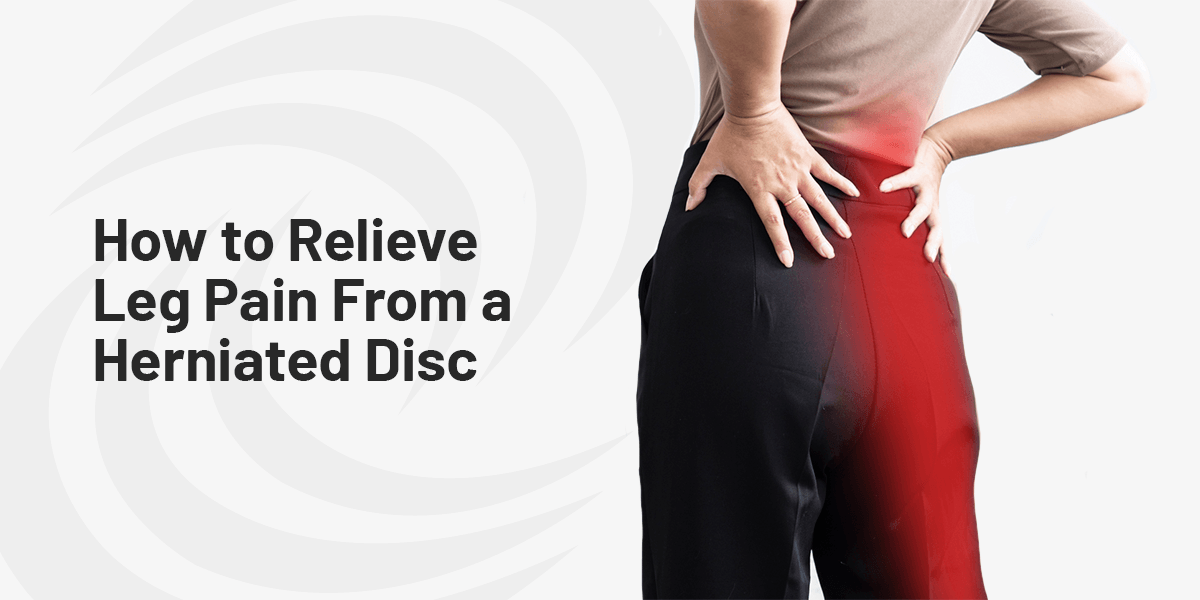
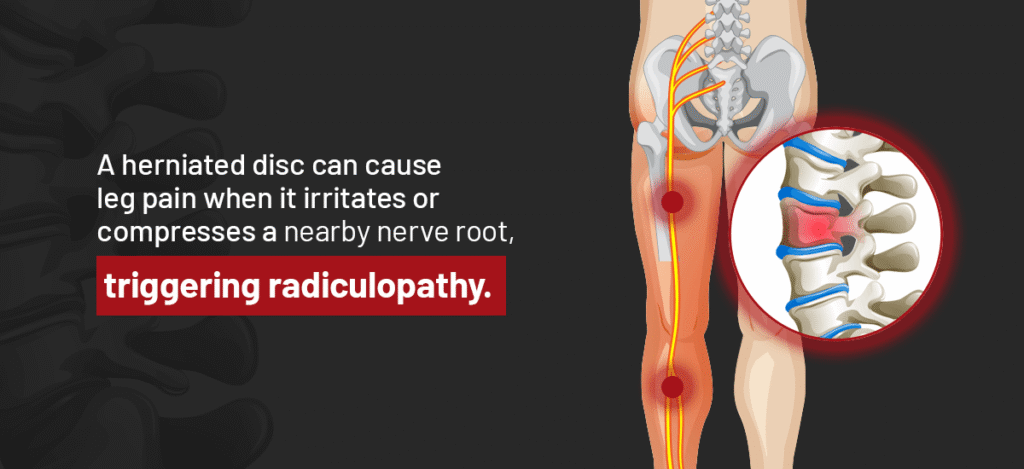
A lower back herniated disc affects roughly 1% to 3% of adults, commonly those aged 30 to 50. This can happen for a number of reasons, including injury, heavy lifting or natural wear and tear as you age. What many people don’t realize is that a herniated disc can cause leg pain when it irritates or compresses a nearby nerve root, triggering radiculopathy. This type of pain can be described as a shooting, burning or tingling sensation down one leg, depending on which nerve root is affected.
If you’re dealing with this kind of pain right now, know there are several ways to manage it and find relief. Options range from at-home care to professional treatment. Understanding what works and when to seek help can lead to a more effective recovery process.
In many people, symptoms from a herniated disc in the lower back can go away on their own while managing the pain with conservative treatments. Here are some options that might provide relief as you heal:
Prolonged bed rest is no longer recommended for herniated disc recovery. In fact, staying inactive for too long can weaken the muscles that support your spine and contribute to joint stiffness. Instead, it’s best to engage in short walks and gentle daily movement if you can tolerate it.
That said, you’ll want to avoid certain activities while you recover, like heavy lifting, twisting motions and bending at the waist. These movements can all aggravate a herniated lumbar disc and increase pressure on the affected nerve root. The goal is to stay active within a comfortable range — not to push through severe pain, which can be a warning sign to stop and seek guidance.
If you’re not able to stay active because the pain is too intense, it’s critical to schedule an appointment with your healthcare provider.
Applying cold and heat therapy at the right times can help manage your symptoms while your body responds to treatment. For the first few days after your pain begins, use ice packs to reduce pain and swelling in the affected area. After this, you can transition to gentle heat for comfort and relief. A heating pad or warm compress can help relax tight muscles and improve blood flow to accelerate healing.
Apply heat or ice with a barrier like a towel between your skin and the pack. Keep in mind that while ice and heat can ease discomfort, they don’t address the underlying disc herniation itself.
Certain OTC medications can help manage mild pain in the short term. NSAIDs like ibuprofen and naproxen address inflammation, which often helps to relieve pain and reduce the risk of further injury. While acetaminophen can supplement NSAIDs for additional relief, it won’t tackle the inflammation contributing to nerve irritation. If you can’t take NSAIDs for medical reasons, Tylenol may help alleviate pain when needed. Your doctor might recommend OTC medications to help with soreness after physical therapy or other herniated disc treatments.
Your doctor may recommend physical therapy as an evidence-backed conservative approach to help you manage your herniated disc leg pain.
The McKenzie Method, guided by professionals, involves specific movements and positioning to reduce nerve compression. A 2024 peer-reviewed narrative review found this method to be moderately effective in treating herniated disc pain.
A physical therapist will first assess your specific condition through a physical exam and gather information about your medical history. They can then tailor exercises to your specific needs.
If conservative approaches aren’t providing any relief for your herniated disc pain, it’s time for medical guidance from spine specialists.
When OTC options aren’t enough, a spine specialist might prescribe medications designed to target specific symptoms. Nerve pain medications can specifically address the radiating, burning nerve pain from a herniated disc. Other options your doctor may prescribe include muscle relaxants or short-course oral corticosteroids to reduce inflammation. It’s important to remember that these options are only part of a broader treatment plan for your pain. While medications might help manage symptoms, they cannot resolve the underlying disc herniation.
Spine specialists can provide injections that deliver corticosteroids directly into the epidural space surrounding the spinal cord and nerves, helping reduce inflammation. While they may only provide temporary relief from a herniated disc, this may help some people engage in physical therapy and other exercises more effectively. Research finds that transforaminal injections may help reduce pain at 3 months for patients with lumbosacral radiculopathy.
Your healthcare provider may recommend surgery if conservative treatments don’t provide relief. They might also recommend surgery if you have neurological symptoms that worsen, like progressive leg weakness or trouble walking.
If your doctor thinks surgery would be the best option for you, know that there are minimally invasive options available. These treatments mean smaller incisions and sometimes faster recovery than traditional open surgery. For instance, procedures like lumbar microdiscectomy and least invasive endoscopic discectomy can be effective options to relieve nerve compression.
The key is to explore all nonsurgical options with a spine specialist first and research your surgical options thoroughly before making a decision. A specialist can help determine whether your symptoms are improving or if additional treatment options may be appropriate.
There are certain symptoms to watch out for that warrant immediate emergency care, including:
It’s important to address herniated disc pain promptly, as delayed treatment increases the risk of worsening symptoms, reduced mobility and permanent nerve damage. Recognizing warning signs and acting quickly is critical.
If you’re experiencing leg pain from a herniated lumbar disc, Desert Institute for Spine Care is here to guide you. Our board-certified spine specialists have extensive experience treating herniated discs. We take a conservative-first approach, starting with the least invasive option for your specific condition.
We provide numerous treatment options for herniated disc leg pain, from physical therapy recommendations and medications to minimally invasive procedures to help you find relief. Schedule an appointment to discuss your herniated disc leg pain and explore the path forward.

Linked sources:
https://www.ncbi.nlm.nih.gov/books/NBK441822/
https://www.ncbi.nlm.nih.gov/books/NBK279469/
https://www.ncbi.nlm.nih.gov/books/NBK279469/
https://medlineplus.gov/ency/article/000442.htm
https://www.sciatica.com/blog/ice-or-heat-for-back-pain/
https://www.sciatica.com/blog/11-treatment-options-for-herniated-discs/
https://www.ncbi.nlm.nih.gov/books/NBK441822/
https://pmc.ncbi.nlm.nih.gov/articles/PMC10888666/
https://www.sciatica.com/blog/what-is-a-cortisone-injection-in-the-spine/
https://ncbi.nlm.nih.gov/books/NBK470189/
https://www.sciatica.com/spine-treatments/minimally-invasive-spine-surgery/lumbar-microdiscectomy/
https://www.sciatica.com/spine-treatments/selective-endoscopic-discectomy/
https://www.sciatica.com/blog/emergency-signs-of-herniated-discs/


 By Justin S. Field, M.D.