

Sciatica can disrupt every aspect of your life, making even simple movements feel overwhelming. If you’re searching for ways to ease your pain and regain comfort, you’re not alone — sciatica affects up to 40% of people at some point.
Fortunately, you can take several practical, research-backed steps at home to find relief and support your recovery.
Before starting treatment for back pain, it’s essential to note that not all back pain is sciatica. Sciatica is pain specifically caused by irritation or pressure on the sciatic nerve. If you notice weakness in your legs, trouble moving your foot or difficulty controlling your bowel or bladder, it’s important to see a doctor quickly. This could mean the nerve is being pressed on more severely.
Sciatica is pain that travels along the sciatic nerve, which is the largest nerve in your body. This nerve starts in your lower back and travels down through the hips, buttocks and both legs. Sciatica happens when something irritates or puts pressure on this nerve, often from swelling or a problem in the lower back, like a slipped disc.
People with sciatica usually experience severe pain, tingling or numbness that starts in the lower back or buttocks and moves down one leg. The pain can worsen when you bend, twist or cough.
When sciatica pain strikes, getting fast relief is a priority. While there’s no instant cure, certain strategies can help reduce discomfort and prevent symptoms from worsening. Get started with these three tips.
Resting in bed may seem like the best way to recover from sciatica, but staying still for too long can actually worsen your symptoms. Weaker muscles and increased stiffness can slow down your recovery.
Engage in gentle activities, like short walks or light stretching, to keep your muscles active and encourage healthy blood flow. This can reduce pain and speed up healing. Try to take several brief walks throughout the day, even if it’s around your home. The goal is to stay as active as your pain allows, without pushing yourself into discomfort.
When used correctly, hot and cold therapy can help significantly in managing sciatica pain.
In the first seven days after your symptoms begin, applying a cold pack to your lower back can help reduce swelling and alleviate pain. Use a cloth or towel between the ice pack and your skin to prevent irritation or frostbite, and keep each session to 15 to 20 minutes. You can repeat several times a day as needed.
After the initial inflammation has gone down, switch to heat therapy. A heating pad or warm compress can help relax tight muscles and improve blood flow to the area, which may ease lingering discomfort. Limit heat sessions to 15 to 20 minutes and never fall asleep with a heating pad on to avoid burns.
Pain relievers can help reduce pain and swelling in the short term. These include:
Remember that these medications are not a long-term solution for sciatica and may not work for everyone. They are most effective when used as part of a comprehensive pain management plan. If you find yourself needing pain relievers for more than a few days, it’s a good idea to check in with a medical professional for guidance.
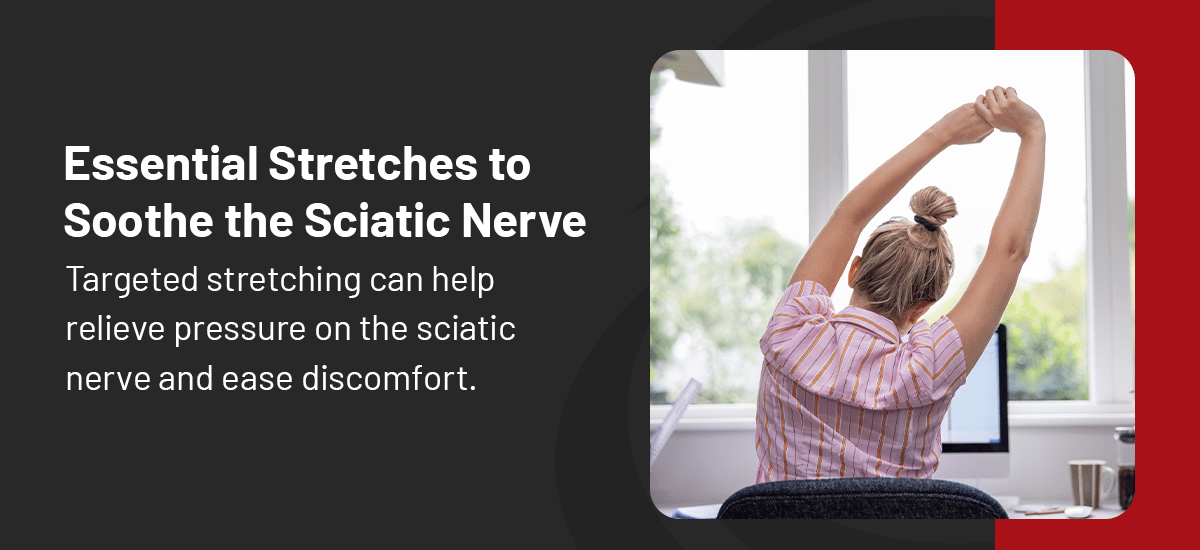
Targeted stretching can help relieve pressure on the sciatic nerve and ease discomfort. The following gentle stretches are commonly recommended for sciatica relief. Remember — never force a stretch or continue if you feel sharp or worsening pain.
A knee-to-shoulder exercise is a lying stretch that targets the gluteal muscles and the piriformis to relieve pressure and tightness in the hip and lower back:
This stretch helps improve spinal mobility and loosen the lower back:
This exercise relieves low back pain and sciatica by stretching the hamstrings, which can reduce pressure on the sciatic nerve:
Small, sustainable changes to your daily habits can help prevent future flare-ups and support your spine health for years to come.
Maintaining good posture is a simple and effective way to reduce strain on your lower back and sciatic nerve. When sitting, ensure your feet are flat on the floor and your knees are at hip level. Using a lumbar roll or a small cushion to support the natural curve of your lower back can significantly improve comfort and alignment.
When standing, balance your weight evenly between both feet and keep your knees slightly bent. At night, choose a supportive mattress and sleep on your side if possible, placing a pillow between your knees to maintain a neutral spine position and reduce stress on your lower back.
When lifting objects, bend at your knees and hips to protect your back. Never lift heavy items by yourself, and avoid twisting your back while carrying anything. If your day involves a lot of sitting, standing or repetitive movements, take frequent breaks. Stretching or walking for a few minutes every hour can help prevent stiffness and reduce pressure on your sciatic nerve.
Chronic inflammation in the body can exacerbate sciatica symptoms, so following an anti-inflammatory diet may help. Focus on eating foods that are rich in antioxidants and omega-3 fatty acids:
These foods can help reduce inflammation and support overall nerve health. Staying hydrated and maintaining a healthy weight are also crucial, as extra weight can put pressure on your spine and worsen sciatica symptoms.
While many people find significant relief with at-home strategies, persistent or worsening sciatica symptoms may signal a more serious underlying issue. It’s important to know when to seek professional help.
If you experience severe pain, numbness, tingling or weakness in your leg, or if symptoms interfere with daily activities, early evaluation can prevent complications and help you access advanced treatment options specific to your needs.
The caring doctors at Desert Institute for Spine Care (DISC) are recognized leaders in diagnosing and treating the root causes of sciatica, offering the latest minimally invasive and least invasive solutions.
If your sciatica pain isn’t improving with home care, our specialists are here to help. Contact us or schedule a consultation and let our experts guide you toward effective, minimally invasive solutions.