
Chronic pain affects nearly a quarter of U.S. adults, and back and neck pain are among the most common sources. If you’re one of them, an epidural steroid injection may have come up as a possible next step.
Understanding what the procedure involves, which conditions it treats and what current research says about its effectiveness can help you feel ready for what comes next.
An epidural steroid injection works by calming inflammation in the epidural space, the area surrounding your spinal nerves, offering a nonsurgical way to help you find some relief. You can think of the epidural space as a sleeve wrapped around your spinal cord. The injection delivers medication directly to the site of inflammation, rather than relying on oral medication to travel through your bloodstream first.
Most injections combine a corticosteroid, which reduces inflammation, with a local anesthetic that provides immediate, temporary numbing while the steroid takes effect. The steroid works by reducing swelling and irritation around the spinal nerves, relieving the pressure that causes pain and giving the irritated nerve a chance to settle down. This is a process often used to treat lower back pain and similar conditions.
The conditions epidural steroid injections treat often share a common thread of nerve irritation or compression along the spine. When inflammation puts pressure on a nerve, the resulting pain can radiate well beyond its original source.
Providers may recommend epidural steroid injections when conservative treatments such as rest, physical therapy or oral medications have not provided enough relief, making them a nonsurgical bridge to more targeted relief.
Not all epidural steroid injections are administered the same way. Your provider can recommend one of three delivery routes based on where your pain originates and how many nerve roots are involved. Both the lower back and neck can be treated with an epidural steroid injection.
A cervical spine epidural steroid injection uses an interlaminar or transforaminal approach, adjusted for the smaller, more delicate structures of the neck.
Knowing what to expect at every stage of the process can make an unfamiliar procedure feel far less intimidating.
Your provider will give you specific pre-procedure instructions, but most patients can expect to prepare as follows.
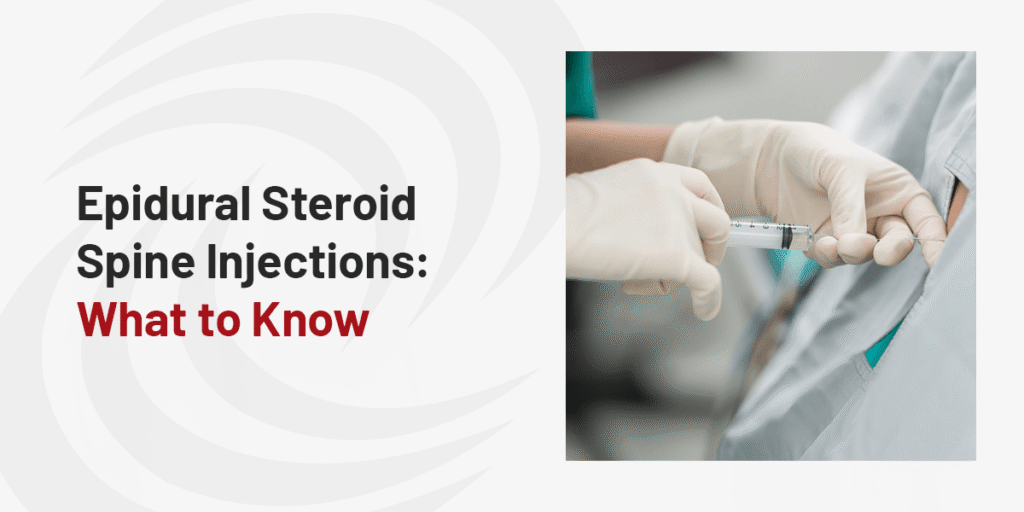
While every provider’s approach may vary slightly, most epidural steroid injections follow a similar pattern. You’ll be positioned on a procedure table while your provider numbs and cleans the injection site. Your provider relies on fluoroscopy, a form of live X-ray imaging, to track the needle’s path in real time, and contrast dye also helps confirm that the needle has reached the right spot before any medication is released.
Most patients are discharged home the same day.
Once their doctor has signed them off, many patients can return to normal activities the day after their injection. Pain may temporarily worsen for two to three days before the steroid begins working, which typically takes three to five days. Common, mild side effects of epidural steroid injections in the lumbar spine include injection-site soreness, temporary facial flushing, a mild headache or brief sleep disruption. Most providers also limit patients to two or three injections per year to protect bone and muscle integrity.
As with any procedure, there are potential risks to be aware of, though serious complications are rare. Within 30 days, lumbar injections carry an overall complication rate of about 8.8%, which can include mild, temporary issues like soreness or a brief flare in symptoms as well as rarer serious complications.
Cervical spine epidural steroid injection complications are generally discussed as their own category, since cervical injections can carry a higher risk than lumbar ones, so your provider will walk through what’s specific to your treatment area before moving forward.
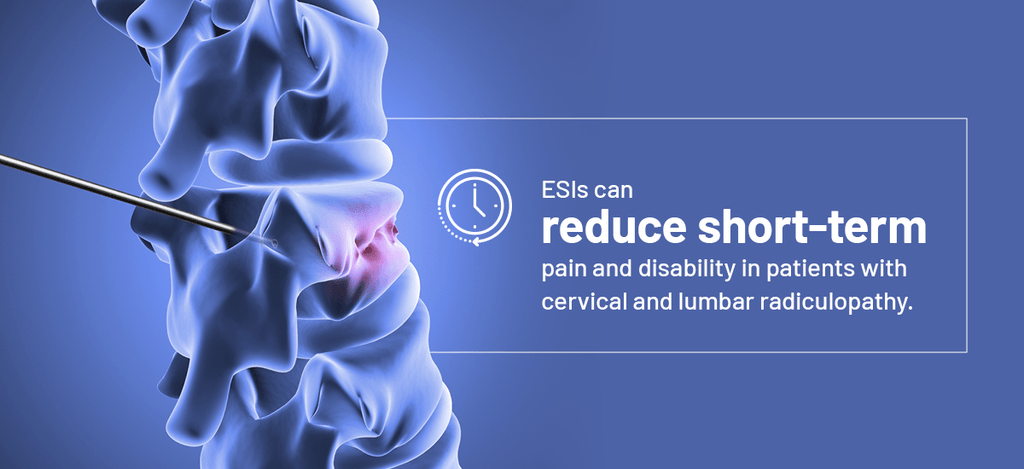
Epidural steroid injections may help reduce pain and improve function for many patients, though results vary depending on the individual and the condition being treated. One systematic review found that ESIs can reduce short-term pain and disability in patients with cervical and lumbar radiculopathy.
That relief is typically temporary, lasting weeks to several months rather than serving as a cure for the underlying condition, and long-term evidence remains insufficient to confirm sustained benefit beyond six months for most patients. Even so, an epidural steroid injection can serve a secondary purpose, as by relieving your pain, it may help to confirm that the treated nerve is the source of your symptoms.
A common misconception is that temporary relief makes an epidural steroid injection not worth pursuing. In reality, that short-term window can be enough to allow meaningful participation in physical therapy, which may help some patients delay the need for surgery, though evidence on this point remains limited. For patients who don’t experience lasting relief, other treatment options remain available and choosing an experienced, board-certified specialist matters for both the accuracy of the injection and the quality of care you receive.
Desert Institute for Spine Care’s board-certified, fellowship-trained spine surgeons treat the full range of back and neck pain, from nonsurgical options like epidural steroid injections to complex spine surgery when it’s truly needed.
DISC’s surgeons always start with the least invasive approach that fits your condition, giving you honest guidance and time to make the choice that feels right for you. Whether an epidural steroid injection turns out to be your next step or another path fits better, their team moves at your pace along the way.
Ready to talk through your options? Make an appointment at Desert Institute for Spine Care and start restoring your lifestyle.



 By Nima Salari, M.D., FAAOS